Tuesday, May 10, 2016

Interview with Karin Salvalaggio


Today is the publication day for the third Macy Greeley novel, Walleye Junction, by Karin Salvalaggio.  This series is quickly becoming a favorite for mystery/crime readers, and I definitely count myself as one of its biggest fans.  Karin is a talented writer and a lovely person, and I'm happy to be able to present an interview with this exciting new force in the genre.


The Interview:


The Reading Room:  Growing up, Karin, you were a “military brat,” traveling around the country to different places where your father was stationed, and now, you’ve lived in England for 22 years.  How has this peripatetic life influenced your writing?

Karin:  Sometimes I think the characters in my novels are loosely based on childhood friends I’ve lost contact with over the years. These are the people I left behind as I moved from one location to another. I’ve always worried about them. While my brothers and myself were fortunate enough to succeed despite our nomadic upbringing, many of our friends did not. With no way to get in touch with them I’m often left wondering how they’re getting on now that the rules of the game have changed. These were people who would have lacked the financial, intellectual and cultural means to rise above the storm that befell the American economy in 2008. Are they still standing? What did they do with their lives? Happily married? Divorced? Deceased? Imprisoned? Impoverished? It’s all a bit of a mystery.

Another theme, which is prevalent in my books, is homecoming. In Bone Dust White, Leanne Adams comes home after abandoning her daughter 11 years earlier. In Burnt River war veterans John Dalton, Tyler Locke and Dylan Reed make the transition from military life to living in a small ranching community with varying levels of success. And finally in Walleye Junction, you have Emma Long returning to her rural community after a lengthy self-imposed exile. I’ve lived in England for 22 years. Perhaps, I’m trying to come home too.


The Reading Room:  Noticing on your Web site the different editions for different countries, such as Germany and Italian, arouses my curiosity about how important to sales are these foreign translations to you and other authors?

Karin:  Foreign translations are hugely important to authors, which is why we try to avoid selling worldwide rights. Though an individual country may not pay a great deal of money it all adds up so it’s an essential source of income. Plus you never know where you may become a bestselling author. An American writer I know is hugely popular in Italy where they’ve recently made a film adaptation of one of his novels, but back in the states he’s virtually unknown. I find it very exciting when a foreign editor makes a strong connection with my writing. It shows I’m doing something that transcends cultural and international boundaries.


The Reading Room:  Your brilliant series with Macy Greeley is set in Montana, a new setting in my reading and now a favorite.  Why Montana, with the different places you’ve lived in your life?

Karin:  Montana has some of the most breathtaking scenery in the world. Vast tracts of wilderness butt up against sparsely populated communities settled by people who view themselves as strongly self-reliant yet live in a world that necessitates interdependency. This contradiction is constantly played out in my character arcs. These isolated communities also offer the perfect opportunity to create a ‘locked room’ murder mystery. A small town has its charms but it also has its secrets. Uncovering those secrets is where I find my stories.


The Reading Room:  In your third Macy Greeley book, Walleye Junction, which comes out on May 10th, the subject matter deals with prescription pain addiction, and this book seems to be addressing the issue very seriously.  The previous two books contained the issues of exploitation of children and young women in Bone Dust White and PTSD in Burnt River.  And, there is the continuing issue of women in the workforce of predominately male supervised occupations.  How important is it to you to include these issues and why?

Karin:  The thing I deplore most in the world is injustice. Institutionalized forces, predominately driven by greed, often undermine our best efforts as individuals. Whether it is unequal pay, exploitation, corruption or protracted wars in the Middle East that have cost the US economy trillions and scarred the lives of hundreds of thousands of servicemen and women, there always seems to be someone out there who isn’t being given a fair chance.

Inspiration for Walleye Junction came from an article I saw in the The Atlantic about the rise of heroin abuse in my home state, West Virginia. The damage it is doing to the communities there is not only heartbreaking, it’s criminal. I was intrigued so I kept on researching. The more I read the more horrified I became. Up until 1999 opiate-based prescription painkillers were only prescribed to post-operative patients and those suffering from cancer. They are as highly addictive as their street cousin heroin and yet the US government neglected its duty of care and caved in to lobbyists. The pharmaceutical companies flooded the markets with Vicodin, Percocet and Oxycodone to name but a few of the lethal derivatives. Less scrupulous doctors began handing them out like candy for cash. Kickbacks pushed them to take on so-called ‘patients’ who ‘shopped’ multiple doctors for the same drugs to feed their addiction or sell on the streets. Pill mills in Florida sold prescriptions online. The drugs were picked up in vans and distributed throughout the US as ‘hillbilly heroin’. At their peak in 2007, pill mills accounted for 47 million of the ­­­­­53 million Oxycodone doses prescribed. Deaths from overdoses are more common than car crash fatalities; entire families and communities have been wiped out; and now that the source is drying up and drug treatment programs are scarce, people are turning to heroin in droves.

This is a manmade epidemic. Elected officials, pharmaceutical companies and medical institutions have been grossly negligent and yet very few people are going to jail. This makes me incredibly angry. It takes a great deal of willpower to write a full-length novel. It turns out a little anger makes me type faster.


The Reading Room:  Karin, when did you know that you wanted to be a writer?  What circumstances led you to this realization?  And, can you remember your first writing as a child that you thought was a good story?

Karin:  I always wanted to be a writer but felt that it was an enterprise reserved for those lucky enough to attend Ivy League schools. I was also well aware that my college degree stretched my parent’s finances to the breaking point. It’s why I chose a major in the sciences. I knew I’d be employable and that was my first priority. I continued to read everything in sight but gradually pushed the dream of being an author aside.

A divorce is a traumatic process that I wouldn’t wish on my worst enemy. When my ex husband moved out six and a half years ago I was unemployed, having given up my work as a graphic designer several years earlier. I’d have to retrain or find an entirely new career path. It was time to be practical again. I signed up for two courses, one to get a teaching credential and another to brush up my graphic design skills. I ended up doing neither. I went on a creative writing course/vacation in Greece for two weeks and came back with an entirely new plan. I enrolled for an MA in Creative Writing at Birkbeck, University of London in 2010. It was a risky move but I felt I had nothing left to lose. A year and half later I had an agent. In 2014 Minotaur published my first novel. And so it goes…


The Reading Room:  Who was your first love in reading the mystery/crime genre as a youth?  Or did you come to this genre later?

Karin:  I was a bit of a reading whore in my youth. Never genre specific, I was just as likely to read and enjoy the literary classics as cheap paperbacks. There was certainly a long stage when I only read crime novels. I believe it was when Kathy Reichs and Patricia Cromwell were at their peak of popularity. But it came to a point when I couldn’t look at another crime novel. It was like I’d eaten too much candy. I felt a little queasy. There is a great deal of violence in some of these books, much of it graphic and I felt ashamed for finding so much enjoyment in them. I stepped away from the genre for a very long time and only read literary fiction. I’ve since come back to reading much more crime fiction, but I am wary as both a writer and a reader. I have my boundaries and I try not to go beyond them. Yes, there is violence in my books, but I’d like to think it isn’t gratuitous. I don’t linger in the morgue or at murder scenes. It’s not what interests me. I want to write about the affect of crime on close communities and families. In my mind that’s where the story lies.  

The Reading Room:  Your covers are so exceptional, and I've heard that some authors have little input concerning their covers and others have a  definite say.  What is your involvement in these striking covers?

Karin:  I have almost no involvement, which is kind of ironic given I used to be a graphic designer. I imagine the design team at St Martins Press and Minotaur are given guidelines, as I doubt they have time to read every novel that comes across their desks.


The Reading Room:  In the first book of this series, Bone Dust White, Macy Greeley, the state police detective, is eight months pregnant.  I thought that was a daring starting point that worked very well.  Can you tell me what your thinking on presenting Macy at this point in her life was?

Karin:  I suppose the pregnancy was an intriguing way of introducing a character who is going through a difficult transition. Macy is clearly ambivalent about motherhood but it takes a while for the reader to understand source of her indifference and depth of her sadness. Though she ultimately accepts her new role as a mother, I never make it easy for her. It also forced me to write a crime novel where my detective wasn’t ever going to use a firearm or get into a physical altercation. Macy has to rely on her wits.


The Reading Room:  I’m always curious about a writer’s habits and process, and I think others sometimes think you simply wave a magic wand.  I know you work hard.  Can you describe a typical writing day?

Karin:  The writing process actually starts off with a bit of magic. It’s as if I see a scene in my head and the cameras start rolling. I take this as far as I can without thinking about the consequences. Sometimes it works out and sometimes it doesn’t. If I worry about the finished product too much I panic.

So, this is a little insight into my highly glamorous writing life –

I have no set schedule and work when I can, which is pretty much all the time. For instance, it is now 1pm and I’m still in my pajamas, having eaten breakfast and lunch at my desk. This will continue until my schnauzer demands a walk at which point I’ll throw on some clothing and stroll around the local park or along the River Thames. I often use this time to work through ideas in my head. If I’m stuck I’ve usually figured it out by the time I get back to my desk.


The Reading Room:  Having met you at the Bouchercon World Mystery Convention held here in the states, in what ways do you think conventions like this one are beneficial to authors?

Karin:  Bouchercon is uniquely important to me because I’m writer who’s based in London but has books published in the US. It’s the way I connect with writers and readers who share my interests. Yes, the networking aspect is an added benefit but that’s not why I will continue attending such events. Crime writers and fans of crime fiction are without doubt the nicest people in the world. I feel I’ve made some very good friends. It’s really quite special.


The Reading Room:  Since you are such a favorite author of mine already, I do have to ask what book or books you’re reading for pleasure now.  So, what’s on your nightstand these days, Karin?

Karin:  With an upcoming deadline on book four and Walleye Junction’s forthcoming publication I’ve been busy so my reading list has been a bit neglected. I’m looking forward to reading Laura Lippman’s Wilde Lake, The Butcher Bird by S D Sykes, Fates and Furies by Lauren Groff and When She Was Bad by Tammy Cohen. I’ve recently read an anthology of Shirley Jackson’s previously unpublished work – Let Me Tell You, which I highly recommend. I’ve also read James Salter’s Light Years for the first time. Absolutely exquisite. 


The Reading Room:  And now, for one of my favorite questions I ask authors.  What would you like your readers to know about you that isn’t in your bio information?  Besides your obvious writing talent, any special interests or talents, quirky or not, you’d like to share?

Karin:  If I'd gone on a painting course instead of creative writing course for my summer vacation six years ago, I may have gone off in a completely different direction.  There's still time though.  I'd love to go to art school someday.  Meanwhile, I really only have time for the occasional doodle on a cocktail napkin...maybe I should start a series.


My Review:


Walleye Junction is the third book in the Macy Greeley series by Karin Salvalaggio, and it clearly solidifies this series and author as major players in the mystery/crime genre. Karin Salvalaggio is as dedicated to excellence as her character Macy Greeley is to finding justice for victims of violence. These stories set in the vastness of Montana find their relatable rhythm in the small communities populating it. And, each of the three books in this series has a different issue that is brought to the reader’s attention through great storytelling and characters. I’m always left with a new awareness of an issue after reading one of Karin’s books, but it is an awareness born from a story into which I’m deeply drawn showing the effects that issue has on ordinary people, and which in the world of Macy Greeley result in murder. Karin Salvalaggio uses sufficient description, but never overdoes it. She deftly uses revealing dialogue to move the story forward, which keeps the action on point. Walleye Junction is announcing that the Macy Greeley series and its author are in the building.

Macy Greeley’s being a detective with the Montana State Police often sent from her home base of Helena to different parts of the state to investigate crimes. This time the trouble spot is Walleye Junction in the Flathead Valley area, with a kidnapping turning to murder. Philip Long was a local radio personality in the Flathead area who spoke his mind, often in clashing opinions to others in the community. Aware that Long has become a kidnap victim, Macy and her team try frantically to find him, but before they can bring him to safety, he is killed, right in front of Macy. All she knows though is that the killer was riding a motor scooter and wore high-end motorcycle gear, and that her own service gun was used to deliver the fatal shots. The search is on to find who kidnapped and murdered Philip Long and why. When two long-time drug addicts, a husband and wife, are found dead from heroin overdoses and their fingerprints match those from where Long was held in captivity, there is some momentary relief, but evidence soon leads Macy to believe that at least one other person was involved in the crime. One question that must be answered is what Philip Long was working on before his kidnapping and death. What big story was threatening someone to the point of murder. There are many players in this tale of greed, and the author takes the reader through the maze of these characters with great attention to detail, so that important connections can be made and dots connected leading to the murderer hiding among the town’s residents. Wives, ex-wives, husbands, ex-husbands, daughters, sons, cousins, friends. Who had the most to lose with Philip Long’s new story?

Those of us readers who are already ardent fans of the Macy Greeley series will be pleased at the continuing development of Macy’s personal life and struggles, too. Macy’s son is now two years old, and is cared for by Macy’s mother when duty calls Macy away from home. Having been disappointed in love, Macy treads carefully in her relationship with Aiden Marsh, Wilmington Creek Chief of Police. In Walleye Junction, Macy faces decisions that will move her toward taking control of her life from her past mistakes and embarrassments.

Walleye Junction is told from two points of view. The first and most significant is, of course, Macy Greeley, who so ably steers the investigation and storyline from murder to solution. The other POV is that of the character Emma Long, Philip Long’s daughter, who has been gone from Walleye for twelve years, leaving right after high school graduation and her best friend’s death from a drug overdose. Emma, like Macy, is looking for answers to her father’s death, as well as events happening before she left town. Emma’s narration in the book gives us the background the reader needs to better understand the characters and motivations of different suspects in this small Montana community. The two POVs work together beautifully to present a complete picture and a suspenseful tale. So many secrets. Which ones lead to murder?


Tuesday, May 3, 2016

Intervieiw with Elly Griffiths


Today is the publication day for Elly Griffiths' new Ruth Galloway Mystery, The Woman in Blue.  Number 8 in this series, it is another outstanding book that already ardent fans will love and new fans will realize they must read the first seven, too.   The Ruth Galloway series is one of my favorites, and I am including a review of The Woman in Blue below.  But, first, Elly has given us an insightful and fascinating interview, a peek at her writing and her personal life.  She is exceptional in both areas. 


Interview with Elly Griffiths:
   
The Reading Room:  First off, Elly Griffiths is your nom de plume, and so I will use it in this interview.  However, with a lovely name such as Domenica de Rosa, which you also write under, why did you choose to use a pen name for the Ruth Galloway series?  Was it your idea or an editor’s?
 

Elly:  The funny thing is that my real name sounds made up! I actually did publish four books under my real name. They were classified as ‘women’s fiction’ but they did all have a mystery element to them. When I wrote ‘The Crossing Places’ I didn’t think it was so very different but my agent said, ‘This is crime. You need a crime name.’ I chose Elly Griffiths because it was my grandmother’s name.
   

The Reading Room:  With your husband’s career in archaeology and your main character Ruth Galloway’s archaeological career, I naturally have to wonder if your husband’s connection played a part in your career for Ruth?

Elly:  It certainly did. About ten years ago Andy gave up a city career to retrain as an archaeologist. This gave the whole family a new interest in archaeology but it did also mean that our lives had to change a lot. We couldn’t afford foreign holidays for one thing so we started to go back to where I had always holidayed as a child – Norfolk. One day we were walking across Titchwell Marsh in North Norfolk and Andy said that prehistoric people had seen marshland as sacred ground. Because it’s neither land nor sea, but something in between, they saw it as a bridge to the afterlife; neither land nor sea, neither life nor death. The entire plot of The Crossing Places came to me in that instant.


The Reading Room:  For those of us who are ardent fans (not sure that even covers the degree to which I love this series) of the Ruth Galloway books, we are much invested in the relationship or non-relationship of Ruth and DCI Harry Nelson.  I realize I’ve never asked you if you had planned a connection between the two when you started writing the first book.  Had you?

Elly:  Yes, I did want them to have a relationship. I was fascinated by the extent to which two people who seem very different (Ruth: university educated, liberal; Nelson: little formal schooling, tough Northerner) could be attracted to each other. I didn’t ever plan it to become quite as complicated though.


The Reading Room:  The series has so many wonderful characters in it, and, of course, Cathbad, the Druid, is wildly popular with everyone.  How did Cathbad come about in your imagining the series, and has his part grown larger than you planned?

Elly:  Definitely. In the first book Cathbad was just another suspect but he has just grown and grown. Now he even has a complicated love life of his own. I live in Brighton, a town known for its alternative beliefs, and Cathbad is an amalgam of many of my friends here.


The Reading Room:  I hesitate to ask this next question about the Ruth Galloway series, but here goes.  Can we fans expect Ruth to continue for many more novels?  Your writing for them is still so fresh, and there’s so much more of Ruth’s future we all want to see, I’m hoping the answer is a short, “there will be many more.”  After all, The Woman in Blue is only #8.

Elly:  Well, I have always said that there will be ten but now – as I’m writing Book 9 – I’m not sure that I am ready to say goodbye. I will definitely have a break after Book 10 though.


The Reading Room:  Tuesday, May 3rd, brings those of us across the pond your 8th Ruth Galloway novel, The Woman in Blue, my review for which will be placed after this interview.  You once again have produced a brilliant story with fascinating history of an English village in the Norfolk area of England and spectacular characters.  In this book, as is often the case, Ruth’s atheism is confronted by the very setting of the story, the shrine village of Walsingham.   How did you decide upon Ruth being atheist, and how important is it to the storyline of the series?

Elly:  It’s interesting, because Ruth is an atheist people assume that I am too. Actually I’m a (slightly freelance) Catholic. Andy is an atheist though and some of the arguments between Ruth and Nelson echo our religious debates. I’m fascinated by belief in all its forms. In ‘The Woman in Blue’ I wanted to look at the way in which worship of a woman (the Virgin Mary) could co-exist with some darker feelings towards women, particularly women priests.   


The Reading Room:  The question about the longevity of the Ruth Galloway series was prompted by the appearance of your new amazing series, the Stephens and Mephisto books, featuring Detective Inspector Edgar Stephens and magician Max Mephisto.  The first one, The Zig Zag Girl came out last year in the U.S., and #2, Smoke and Mirrors, comes out this year.  How did this series come about, Elly?

Elly:  I’ve always wanted to write about my grandfather who was a music hall comedian. Grandad appeared on the bill with a famous magician called Jasper Maskelyne, who had been involved with a wartime espionage group called The Magic Gang. This gave me the idea for a series which would combine magic, crime and vaudeville. I have really enjoyed writing these books and have just finished the third, The Blood Card.


The Reading Room:  Elly, for those of us who aren’t writers, or authors of books, it’s always a curiosity as to how you go about your writing.  Could you share some of your process, including researching, with us?  What is a typical day, or is there a typical day, like for your writing?

Elly:  I have two children and they leave from school at about 7.30am. Then I make a pot of strong coffee and start writing. I always write until midday. I used to go to see my mother at lunchtime but sadly she passed away last year. I still have the same routine though. Now at midday I might go for a walk by the sea. Then I’ll do the shopping and whatever housework needs doing. When the kids come home at 4pm that means no more writing. I try to write every day unless I am teaching (I teach creative writing at West Dean College).


The Reading Room:  It never ceases to amaze me that authors make time to read other books than their own, but it is always interesting to me to know what they are reading.  So, Elly, what’s on your nightstand these days? 

Elly:  I love reading and am never without a book. I reread a lot too (I read The Moonstone every year, for example). At the moment I’m reading a brilliant debut novel by Anna Mazzola called ‘The Unseeing’. It’s a historical mystery based on a real murder case.


The Reading Room:  And now, for one of my favorite questions I ask authors.  What would you like your readers to know about you that isn’t in your bio information?  Besides your obvious writing talent, any special interests or talents, quirky or not, you’d like to share?

Elly:  I love swimming in the sea and try to swim from April to October. My mum used to swim all year round and my ambition is to do this too but it is very cold in the English Channel! I’m also a keen horse-rider.


Review of The Woman in Blue

The Woman in Blue (Ruth Galloway, #8)The Woman in Blue by Elly Griffiths
My rating: 5 of 5 stars


Sometimes, I think that the hardest reviews to write are for the books you most love. Trying to do justice to a favorite read, a favorite author, a favorite character and series is a tall order in a short space. So it is with the latest entry into the Ruth Galloway series by Elly Griffiths. Of course, I haven't read anything by Elly Griffiths that I haven't loved, and Ruth Galloway is such a special character to me, one in which I'm so emotionally invested. The Woman in Blue took my emotions to a whole new level, as it is a pivotal book in Ruth facing her own emotions and truths. I felt like both Ruth and I were wrung out by the end, except Ruth is always more composed than I.

The action, and there is plenty of that along with the emotion, gets underway when a beautiful young woman is discovered strangled and left in a ditch outside of Walsingham, a Norfolk village known as "England's Nazareth" because of its shrines, medieval religious ruins, and pilgrimage site. Its connection to and sightings of the Virgin Mary enhance its Nazareth moniker, and it is the incomparable character of Cathbad, Druid friend of Ruth's, that mistakes this murdered woman as a possible vision of the Holy Mother the night before her body is found. House-sitting for a friend in Walsingham, Cathbad sees a woman in a white gown with a blue coat-like attire in the graveyard next to where he is staying, but she slips away before he can discover who or what she is. So, a bit of the other-wordly atmosphere is set up in a place where religious history and myth are the bones of the community. DCI Harry Nelson is called into investigate, and the woman is identified as a somewhat famous model who was in residence at a local drug rehabilitation center called The Sanctuary.

Ruth is on a parallel course to Walsingham, as an old college friend named Hilary Smithson emails Ruth about meeting in Walsingham. Hilary, who is now an Anglican priest, is attending a course for female priests on becoming bishops. Not everyone is thrilled about Hilary and her fellow female priests being in the priesthood, and Hilary confides in Ruth about nasty, threatening letters received from an anonymous source. Religion is not Ruth's passion by any means, but she is interested in the archaeological history of Walsingham and the welfare of her friend, so Ruth agrees to read the letters. She then encourages her friend to contact the police, and, thus Nelson, the father of Ruth's five-year-old daughter becomes involved in Hilary's problem. When one of the female priests who is attending the course with Hilary is also found murdered, Nelson has to consider the possibility that the letters and the two murders are related. Ruth and Nelson find themselves once more in the thick of a case that brings them together trying to solve murder and trying to figure out their place in one another's lives.

Elly Griffiths does so many things well that there's always the risk of leaving something out when talking about why her Ruth Galloway series is so special. The characters are always at the top of the list when readers praise the series. Ruth and Nelson, with their complicated relationship (after all Nelson is married and seems to want to stay that way, but does he?) is one of my favorite parts of every book. I was delighted that The Lady in Blue had both characters doing some real soul searching and some affirmation of repressed truths. Ruth's witty conversation, both to herself and others, tells us so much about this dear friend. Cathbad is just a gem of a character, and he definitely puts the cool in Druid. All the supporting cast and the newly introduced characters for this particular story have such attention to detail and development that I truly want to meet them all. Setting is another area in which Elly excels, and readers get to become ensconced in the village of Little Walsingham, as well as still enjoy the beautiful geography of Ruth's marshlands. There is something oddly peaceful about the wilds of Norfolk. Elly Griffiths seems to have a bond with the land and sea of this area that transfers beautifully to the written page. Of course, the stories in which these wonderful characters and settings exist are always suspenseful and thrilling, and as in most first-rate mysteries, time is always ticking on the page and in the reader's mind.

I received an ARC of The Woman in Blue, which was greatly appreciated, as the book doesn't come out in the U.S. until May 3rd. It is, however, already published in the UK if readers can't wait, and so many fans of this series just can't. I have loved all the books in the Ruth Galloway series, but I will have to admit that this new one is a favorite amongst favorites. It checked all the boxes for me. Thank you Elly Griffiths for once again providing such great writing for all to read.


Monday, April 25, 2016

Letters from a Serial Killer by Kristi Belcamino and Stephanie Kahalekulu

It is a true story, one of the most heinous of crimes resulting in the deepest of heartache.  I became friends with Kristi Belcamino through her role as the author of the Gabriella Giovanni crime/mystery series.  Kristi is a bright, joyful person with whom you immediately feel better about the world and its inhabitants.  And, she is this bright light, no deception there.  But, she carries a heavy burden inside, one that led her to write the fiction series, with the first book, Blessed Are the Dead, a direct link to the burden of experience that lies within her.  That experience is her encounter with Evil in the name of Curtis Dean Anderson, a pedophile, a kidnapper, a murderer.  The true account of that horrific experience is now available in the book Letters from a Serial Killer by Kristi Belcamino and Stephanie Kahalekulu, the aunt of Xiana Fairchild.  Xiana was abducted by Anderson in 1999, and both of these women corresponded with and visited Anderson to try and obtain information about Xiana, hoping to bring her home safely.  Below is a review of this heart-shattering book.  Whether you read Kristi's fiction series (which is an amazing series) or not, Letters from a Serial Killer is an important book you need to read.  Protecting children from evil is a responsibility we all share.

Letters from a Serial KillerLetters from a Serial Killer by Kristi Belcamino

My rating: 5 of 5 stars


As hard as this true story was to read because of the monster at the center of the case, I can't begin to imagine how hard it was for Kristi Belcamino, along with Stephanie Kahalekulu, to relive and write. A pedophile who kidnaps and murders is the lowest of the low, the most evil of the evil, and to look this evil in the face requires a strength that few of us could muster.

Curtis Dean Anderson is the nightmare that every parent wants to believe is just that, a nightmare and not a reality. Kristi Belcamino, who was a crime reporter for the Contra Costa Times in the late 90s gained the knowledge of that reality when seven-year-old Xiana Fairchild went missing on her way to school in 1999 in Vallejo, California, a community across the bay from the city of San Francisco. At the time, Xiana lived with her mother and her mother's boyfriend in a rundown apartment in Vallejo, but it was Xiana's aunt, Stephanie Kahalekulu, who had raised Xiana, up until six months prior. Xiana's life with Stephanie was a good one, full of love. It is Stephanie with whom Kristi became friends in the long search and hope for finding Xiana alive. Kristi's newspaper coverage became more than a story for her paper; it became her life, all consuming. Stephanie's life, too, became a complete commitment into this living nightmare, as she uprooted her life and those of her two children from a peaceful, orderly one in Colorado to a chaotic, gut-churning one in California.

A break in the case came when Anderson was arrested for the kidnapping of another little girl, one who was fortunate to get away from him before he could end her life. With his arrest, both Kristi and Stephanie had renewed hope that Xiana would be found alive. So began a cat-and-mouse game that Anderson played with the two women, with them visiting him and corresponding with him through letters, hoping to gain information that would lead them to Xiana's safe return. Kristi, with her brilliant writing skills and emotional immersion, and Stephanie, with her heart-on-the-line descriptions, relay to us what horrors they endured in communicating with this Evil in the guise of a human. Hope and then despair, crumbs of information that led nowhere, demands that couldn't or wouldn't be met, heartache and grief. It was a trail of terror that led to the ultimate anguish.

It has been sixteen years since both women have dealt with this Evil and fifteen years since they discovered the truth about Xiana's fate from the grim discovery of her skull, and, yet, they deal with it every day of their lives. How can something this wretched not impact the rest of your life? Kristi and Stephanie have found their own ways of managing the torment within, and their bravery in bringing this important account to readers must be commended. Heroes do what must be done for the good of the world, and Kristi Belcamino and Stephanie Kahalekulu are heroes indeed.


Sunday, April 17, 2016

Anthony Awards, Nominee Considerations, Reviews Part 7

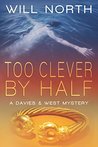
There are only two weeks left until the ballots are due for Bouchercon Anthony Awards nominations, and I have a five more 2015 books I've reviewed that I want to ensure are given their due consideration.  Today's selections include two from Kristi Belcamino, Blessed Are Those Who Weep: Gabriella Giovanni Mysteries #3 and Blessed Are Those Who Mourn: Gabriella Giovanni Mysteries #4 from Witness Impulse (both Belcamino books eligible for Best Paperback Original); Away in a Manger: Molly Murphy Mysteries #15 by Rhys Bowen from Minotaur Books (eligible for Best Novel); Too Clever by Half: A Daviess and West Mystery #2 by Will North from Booktrope (eligible for Best Paperback Original); and Art in the Blood: A Sherlock Holmes Adventure by Bonnie MacBird from Collins Crime Club (eligible for Best Novel).


Blessed are Those Who Weep (Gabriella Giovanni Mystery #3)Blessed are Those Who Weep by Kristi Belcamino

My rating: 5 of 5 stars


In the third book of the Gabriella Giovanni series, author Kristi Belcamino gives us a quite different Gabriella. Although this amazing character is someone I quickly came to love in books one and two, Gabriella has from the beginning had ghosts and demons that tore at her happiness. She has the job she loves as a crime reporter on a major newspaper in the San Francisco area, and she has a partner who is the man she wants to spend the rest of her life with. But, hanging on to her past has cost Gabriella from fully believing in a happy-ever-after.

Family has always been important to Gabriella, and recent events in her life have made it even more so. Called to an apartment for what was termed by the caller the story of a lifetime, Gabriella stumbles into a murder scene, a family slaughtered. But in the midst of the carnage is a baby girl, unscathed, a survivor. Seeing this child brings up Gabriella’s grief about her miscarriage and starts her spiraling downward into a dark abyss. She becomes obsessed with the child and finding the person who slayed the child’s mother, grandparents, and uncle. Everything and everyone else in Gabriella’s life suffers in the wake. She becomes unfocused at work, unreachable in her relationship with Donovan, and unkempt in her physical appearance. She is the perfect metaphor for disheveled in every way.

Gabriella has always had a tendency for obsession, but in this story, obsession take a trip on speed. She is convinced that she knows who the killer of the slain family is, and she is committed to protecting the baby girl named Lucy from falling into anyone’s hands who might harm her. Although a mere ghost of her former self, Gabriella brutally pushes herself to find answers before a deadline of no return for Lucy. Even though her editor took her off the story due to her involvement, Gabriella digs deeper and deeper into a quagmire of cover-ups, a sex club, martial arts, and ties to the war in Iraq. In her determination to protect the surviving child Lucy, Gabriella throws caution to the wind more than ever and jeopardizes all that might save her in return.

Blessed are Those That Weep will have you wringing your hands in concern over whether Gabriella will survive with any semblance of a meaningful life. Kristi Belcamino knows how to do many things brilliantly as a writer. One of those skills is involving the reader emotionally, creating a vested interest that keeps the book in your hands, because you have to know how the characters fare in the aftermath of having their lives torn apart. And, it’s hard to find a better opening sequence than what begins the tale in Blessed Are Those Who Weep. Belcamino is a master at taking the reader quickly into the action and maintaining an intense pace all the way to the end. It’s safe to say that readers of this electrifying series will need a moment to catch their breaths when the last page is turned.


Blessed are Those Who Mourn (Gabriella Giovanni Mysteries #4)Blessed are Those Who Mourn by Kristi Belcamino

My rating: 5 of 5 stars


You might think that having read the previous three novels in the Gabriella Giovanni series, you are prepared for almost anything. You would be wrong. Blessed Are Those Who Mourn takes living in a character's head to a whole new level. When you read this book, you will feel pain and suffering and hopelessness. You will fall into a hole so dark and deep, so filled with evil, that your heart beats wildly and your breath comes in ragged gasps. How do people cope with certain unimaginable events of horror? Following Gabriella Giovanni and Sean Donovan through this story will give you an insight that will give you some understanding of that.

Five years has passed since Gabriella and Donovan have had their lives and their love tested to the core in Blessed Are the Meek. Gabriella has recovered from the despair that had almost shut her down and has learned coping skills to deal with her past traumas. She and Detective Sean Donovan finally have everything they ever wanted. Five-year-old Grace Donovan is a beautiful, fierce child who has fulfilled every dream that Gabriella ever had about a family life with Sean Donovan. The nightmares of Gabriella's past have been replaced with happiness and love, but, evil isn’t finished with Gabriella Giovanni yet.

Still working as the crime reporter for the Bay Herald in San Francisco and Donovan still working as a detective for the Rosarito Police Department, it's not unusual for the two to be working the same case, so to speak. As young college women start showing up dead in the Suisun Bay area, there is an eerie and unavoidable common thread, Bible verses left with the bodies. Gabriella is all too familiar with these verses, and suddenly, the nightmares of yesterday have returned. Someone is sending a message, a message that if interpreted incorrectly will cost Gabriella her world. She will be called upon to find strength to battle an all-too familiar evil in the midst of all-consuming despair, and, of course, it wouldn't be a Gabriella Giovanni mystery if the ticking of the clock wasn't a driving force in Gabriella's fight for the right answers.

The hold that this story has, the very gripping claws of emotional involvement that the reader experiences is reading at its best. As in all the novels in this series, the action moves rather quickly, but it will not move fast enough for the reader. Blessed Are Those That Mourn makes a speed reader out of the slowest, something to which I can personally attest. The story can simply not be left to resolve the next day. It demands a full-on commitment as soon as page one is begun. So, clear your day or night to read one of the most engaging books you will ever cry your way through.


Away in a Manger (Molly Murphy Mysteries, #15)Away in a Manger by Rhys Bowen

My rating: 5 of 5 stars


I was especially thrilled when I learned earlier this year that there would be two Molly Murphy books out in 2015, The Edge of Dreams last spring and Away in a Manger this November. I truly cannot get enough of Molly, her family, her friends, and the city of New York City at the beginning of the 20th Century. Rhys Bowen has gifted readers with a Christmas story bonus that I wasn't able to wait until Christmas to read. Having been lucky enough to receive an ARC, I even got in a bit early before the November 17th publication date. This series is such a favorite for so many readers, and fans will be delighted with Away in a Manger. It's Molly at her detecting best, clever and resourceful with a maturing confidence in herself and her abilities. The author's meticulous research is evident in the historical details of New York City coming into a new century, where the newness of motor cars is in high contrast to the struggling problems of the immigrants, especially the untended children of the poor.

Molly is preparing for Daniel's mother, the other Mrs. Sullivan, to visit for the Christmas holidays, and while running errands with her baby son and twelve-year-old Bridie, two young immigrant children catch their attention. Under-dressed and obviously underfed, the two children, whose names are Tig and Emmy, are brother and sister out on the cold streets trying to earn money, as are many children at that time. First Bridie, then Molly are drawn to these children in particular, the very young Emmy with an angelic singing voice and the well-spoken Tig. They are not the usual children of the street encountered. So, Molly is pulled in by her heartstrings and Bridie's concern to see that Tig and Emmy have some warm clothes and food. It, of course, gets much more complicated, with the mystery of their missing mother and an "aunt" who isn't really an aunt, who lets them stay at her boarding house, but only at nighttime. Molly is determined to find out who these children are and what has happened to their mother, and her best friends Gus and Sid become involved and enchanted with the two beggar children. Molly's investigation will take her from the dregs of society to the upper echelon of it, and will reveal a dark, twisted plan of greed and heinous acts.

And, there is Christmas. Molly and her mother-in-law have never been completely comfortable with one another, and the Christmas that Molly hoped would show Daniel's mother how happy Daniel was with his family turns chaotic. Even the steady Daniel presents a major problem with which Molly must deal. There is much to do to save Christmas for everyone, the Sullivans and the two orphaned children, and a happy ending seems a desperate reach indeed. Much is at stake for many in Maggie's latest challenge.

Great characters, fascinating plot, and Christmas magic. Rhys Bowen never fails to deliver a fascinating, thrilling tale. This Christmas season she gives readers a gift that is sure to please.


Too Clever by Half (A Davies & West Mystery Book 2)Too Clever by Half by Will North

My rating: 5 of 5 stars


Will North has again managed to capture Cornish culture in a thrilling continuation of the Davies and West mystery series set in Cornwall, England. As the first book, Harm None, took readers inside the ancient world of witchcraft, wise women, and magic in the culture of the Cornish people, Too Clever by Half explores the acceptance and practice of Druidism in an area that is religiously non-conformist. Cornwall is such a rich source for ancient history and beliefs, and North continues to include the archaeological aspects of the history, as the major impetus for murder and mayhem. In Too Clever by Half, the discovery of an Iron Age underground cave full of ancient treasures, treasures that by English Treasure Act of 1996 must be reported to the local coroner's office to be determined if further government involvement was warranted. Archie Hansen, the farmer who makes the discovery of the artifacts on his farmland is more interested in a quick sale of the valuable items than a lengthy process in which he'd still get money, and even more money. Archie has plans, big plans, but they don't include the government.

The Lizard Peninsula is the part of Cornwall in which Too Clever by Half is set, although the story begins at sea, where a man's naked body is found floating face down. The Major Crimes Investigation Unit from Bodin is called in, so Detective Inspector Morgan Davies gets the nod to investigate. The Scene of Crimes Manager, Calum West, is on the case, too, in spite of the lack of said scene. The victim turns out to be the very farmer who discovered the ancient artifacts on his land, but that part of the story isn't known to the investigators until later. The first line of investigation is into Archie Hansen's role as head of the local Druid community, an interest that Archie shared with his companion, Charlotte Johns, who reported him missing, which led to identification of the floater. The Walter Scott quote aptly describes the story that unfolds from the discovery by Hansen to the discovery of the murderer, "Oh what a tangled web we weave, when first we practice to deceive." Lies, adultery, and secrets create an atmosphere ripe for revenge for several different suspects, but who wants to settle the score the most? Who decides that murder is justified? Our dear Archie seems to have offended and mistreated many. It is indeed an untangling of motive and opportunity that Davies and West must accomplish if they are to clear the innocent and convict the guilty.

Throughout this novel and its predecessor, one of the aspects I enjoy most about North's writing is the witty repartee between his main characters and with those whom they converse. The conversations between Davies and West are, of course, the ones in which I take special pleasure. Their evolving relationship, both professional and personal, is revealed largely by these conversations, where West may be the one person to never become flummoxed by Davies, and, indeed, he possesses an understanding of where her sharp words come from and is more often than not able to reach underneath her hard exterior.

Having now read this second and most recent book in the Davies and West series, I am confidant that the series will continue to be a favorite. Will North takes full advantage of the amazing Cornwall as a setting, with stories and characters that well match the special place. The precise descriptions of the differing topography that is Cornwall makes North's stories ones in which a reader feels fully engaged. I'm looking forward to the new year and another Davies and West mystery in my reading queue.


Art in the Blood: A Sherlock Holmes AdventureArt in the Blood: A Sherlock Holmes Adventure by Bonnie MacBird

My rating: 4 of 5 stars


Art in the Blood is a pastiche with one of my favorite characters, Sherlock Holmes, and is an engaging tale and a promising series that I'm looking forward to reading more of. One of the aspects of this book that is the best is the research of author Bonnie MacBird. She is genius at including all the sidebar items of history that make fiction sing for me. And, the reading of Art in the Blood isn't the end of those fascinating tidbits. It is simply a required part of this reading to visit the author's Web site and read through, listed by chapters, her illustrated annotations. I'm such a fan of authors going the extra mile to enhance the reading experience, and MacBird does that and then some.

This Sherlock tale takes place in Sherlock's rather early days, as he is 34 and is in the throes of a depression over his inability to bring closure to the Ripper investigation. Newly wedded friend Watson, having been preoccupied with his new wife and living arrangements, is distressed to find Holmes in a cocaine-induced stupor when he at last visits Baker Street. A solution to Holmes' state arrives on the heels of Watson's appearance in the form of a letter from Paris, a letter requiring the skills of Sherlock Holmes to even read it. The letter is a request for help from a beautiful French cabaret singer (is there any other kind of French cabaret singer), a Mademoiselle La Victoire, whose son is missing. To complicate matters, the son is the illegitimate child of an English Earle, who has been raising the boy as his and his wife's own.

Sherlock jumps into action with he and Watson running for the train to Paris. Of course, finding the child will be the easy part of this adventure. There is lost art, megalomaniac and ruthless men, murder most foul, long-kept secrets, more missing children and Sherlock's brother Mycroft all thrown into the danger that must be faced. Sherlock seems the only one who could possibly connect all the dots and resolve all the problems, but he himself will be tested like never before.

Monday, April 4, 2016

Publication Day and Reviews, The Murder of Mary Russell by Laurie R. King and Killer Takout by Lucy Burdette

Today is the publication day for two of my favorite authors and series.  The Murder of Mary Russell by Laurie R. King is the 14th Mary Russell and Sherlock Holmes book in that long-time favorite series, and it lives up to every bit of hype that has been buzzing about it for months.  Killer Takeout by Lucy Burdette is the 7th Haley Snow, Key West Food Critic mystery, and it is more fun than murder really ought to be.  I was fortunate to read both of these books before publication date, so my reviews are already written and ready for readers to consider below.  The Mary Russell review is much shorter than my normal reviews because I simply couldn't give anything away if I wanted the reader to have the same amazing experience I had.  Haley Snow's review touches upon many aspects of the book, but there are so many more sweet surprises left.  So, Happy Birthday to these two fascinating books!


The Murder of Mary Russell (Mary Russell, #14)The Murder of Mary Russell by Laurie R. King
My rating: 5 of 5 stars


The title of this latest Mary Russell/Sherlock Holmes is enough to make long-time fans, including me, of this series wring their hands and bite their nails. Murder of Mary Russell? Has author Laurie King lost her mind? Have fans not shown how much they love Mary? Well, there was nothing to do but read the book and hope for the best.

So, what to tell those who haven’t read The Murder of Mary Russell. I can tell you that Laurie King has written a brilliant book, one of the best in the series. There is so much of the unexpected and it’s all so beautifully written that I can only conclude Laurie is a genius. The characters are all cleverly written, creating a sustained interest in the scoundrels as well as the more admired, Mary Russell and her husband Sherlock Holmes. But, it is Mrs. Hudson who steals the show in this book. It so happens that Mrs. Hudson has a past, and, what an interesting past this quiet, efficient woman has. She didn’t just appear at 221 Baker St., a grown woman with no history. Her story is quite worthy of its own telling.

And, now I have to stop short of revealing the plot of this gripping story, as that would diminish the joy for others of discovering every savory, surprising tidbit that makes this book one of the best books I’ve had the pleasure of reading. The only final information that I dare impart is that there is blood, quite a substantial bit, on the floor of the parlor in the Sussex house shared by Sherlock Holmes and Mary Russell, and Mary Russell is missing. Ready, set, read!


Killer Takeout (Key West Food Critic Mystery #7)Killer Takeout by Lucy Burdette

My rating: 5 of 5 stars


Hold onto your floppy hats, fans of Lucy Burdette's Key West Food Critic mysteries. It's Fantasy Fest week on our favorite island, where the wackiest of the wacky celebrations includes events such as the Zombie Bike Ride, the Tighty Whitey Party, the Pet Masquerade, the Tutu Party, and the Duval Street Parade where body paint is often a substitute for clothing. Key West is practically bursting at the seams with wall to wall people visiting for this wildest adult extravaganza, and crowds of uninhibited revelers aren't the only ones swirling. A possible hurricane is waiting off the coast of Cuba to join the party. And, Killer Takeout gives readers a front row seat to all the festivities.

While Haley Snow, food critic for the online Key Zest magazine is currently writing a lower key piece for the magazine on takeout food, due to the impossibility of doing restaurant dining-in during Fantasy Fest, she has plenty on her plate. Her mother has decided to marry her sweetheart Sam during this craziest of weeks in Key West, which has Haley dealing with arrangements that are challenging to say the least. Miss Gloria, Haley's adorable octogenarian houseboat roomie, has signed her and Haley up for the ending Duval Street Parade as parade ambassadors. Haley's co-worker at Key Zest, Danielle, is the Fantasy Fest Queen, so there are activities to attend supporting Danielle. And, she is covering some of the events for Key Zest, including the Zombie Bike Ride. All the while, Key West televisions are set on the weather station tracking the impending storm/hurricane.

With all the churning and twirling of celebration and storm, a murder is served, and, of course, Haley has her hands in the pie. Being observant and apparently blessed with good hearing, Haley hears a strange call from behind her in the Zombie Bike Ride. "Zombie down." The downed zombie isn't just down, but dead, and the victim, Caryn Druckman, is a runner-up to the Fantasy Fest Queen crown and the person Haley's friend Danielle recently had an altercation with. Haley rushes to Caryn lying in the street, but there is nothing she can do and nothing the victim tells her that can help before the paramedics take her away. Haley's boyfriend on the Key West Police Force, Detective Nathan Bransford, focuses on Danielle as the guilty party in the demise of the unpopular Ms. Druckman, but Haley knows that there's more to the story than a beauty queen gone bad. So, Haley does what Haley does best, starts asking questions and taking notes to clear her friend and find out who really had it in for the victim. So much is up in the air and out of control, and Haley is on a deadline to find answers before they're all blown away.

Every time I read a book in this series, I think it is the best one yet. They are all so much fun and full of the most animated, interesting characters that ever graced the paradise known as Key West. The author takes great care with all of her characters, whether they be a regular or performing a guest role. The dialogue is always fresh and lively, and shows that Haley maintains a sense of humor throughout her ups and downs. The food is always to die for. Well, it is. Even in the takeout menu items, there is no dearth of drooling over the meals. Lucy Burdette has a magical way of making this beautiful island come alive to readers, and I'm convinced that she is responsible for increased tourism. It's really hard to believe that Killer Takeout is the seventh book already in this series, but time does fly when you're having fun.

I was given a copy of this book by the author for review, and I guarantee an unbiased review has been given.