Wednesday, March 30, 2022

Widowland by C.J. Carey: Reading Room Review


It’s 1953 and Britain has been a protectorate of Germany for thirteen years. Instead of WWII, the government of Great Britain agreed to join the Alliance, Germany’s formation of territories that includes, among others, France and Austria. There is a protector from Germany, or the mainland, who oversees the British government and the rules and regulations implemented with the joining of the Alliance. There is still royalty, a King and Queen, but it is King Edward VIII and Queen Wallis who sit on the throne as figureheads. King George V and his family have vanished, including the two princesses Elizabeth and Margaret. The Protector, Alfred Rosenberg from Germany, holds all the power and now lives at 10 Downing Street, London. There is no longer a Prime Minister.


Everything has changed from how it was in the Britain of Before. One of the most jarring changes is in the application of a caste system to the women. After a female’s fourteenth birthday in Britain, she receives a letter to summon her for a classification date. The appointments include physical examinations, which incorporate taking measurements of the skull and close attention to nose shape and eye color, with the results compared to a chart to determine placement. Family history and mental illness are also covered. The caste assigned by the Frauenshaft, or Women’s Services, will follow you the rest of your life unless you get demoted for some reason. Different classifications include, from the top to the bottom, the Gelis, the first, elite class; Klaras, the all-important mothers producing offspring for the Alliance; Lenis, professional women, like office workers and actresses; Paulas, the caring professions of teachers and nurses; Magdas, shop and factory workers; Gretls, the kitchen and domestic staff; and the Friedas, those women over fifty who are widowed or childless. The Friedas live in places called Widowland, the worst possible housing and conditions. They are non-essential in every way. The names for the classifications are taken from women

There are regulations for each caste of women, down to the number of calories they are allocated daily. Also, their hair styles, where to live, shop, eat, go. Rose Ransom’s classification occurred when she was sixteen, and she was luckily assigned top classification, a Geli. None of the women are allowed to vote. Women of childbearing age are supposed to find a husband and bear children for the Alliance. If women lag behind on this responsibility, they will be visited by the authorities and be questioned. To complicate the achievement of having children, there is a scarcity of British men available, as many of them have been sent on Extended National Service for the Alliance, so some women become desperate and place ads in newspapers for husbands. These ads do not draw the most attractive results.

Other adverse changes affecting the people of Britain include more and more raw materials going to Germany and depleting Britain’s supplies of food, clothing material, and even paper. The average Alliance citizen in Britain has “shabby clothes and worn shoes.” Clothing is regulated through a system of coupons, which is, of course, dependent on what caste. Many women have sewing machines to try and piece together clothes to wear. It is mostly noticeable in women’s clothing, as men’s differences aren’t as pronounced. Only the very privileged have cars and decent housing. Religion has been replaced with the Nazi encouragement to worship the Leader (Hitler) and be committed to the Nazi philosophy.

At first there was open resistance to the Alliance by many British citizens, but that was put down quickly and violently, and now the resistance has gone underground. If discovered, insurgents are picked up in vans and taken away, most likely to a “camp. Germany controls the desire to rebel by controlling communication with the outside free world, only allowing Alliance sponsored news on the radio and in the paper and not allowing any travel outside the British Isles. So, most of the population of Britain doesn’t know what’s going on other than in their own backyard and has only their restricted views of truth. Journalists are all under close scrutiny and have to write only what complies with the Alliance message and beliefs. “Life in the Alliance was a process of continual observation. Universal Surveillance, it was called. Eyes followed you everywhere, seen and unseen.” Freedom Radio from America was secretly accessible, but it was risking your life and that of your family if caught, and with neighbors spying on neighbors, few would risk it.

Departments exist to control all aspects of life, to ensure that the past way of life is forgotten and Nazism rules thoughts and actions, such as the Department of Culture. This department deals with literature and music and art and film (movies), not only banning that which is not in sync with the Nazi philosophy and teachings, but it also is tasked with altering the classics of literature to reflect the demoted value of women and their inferiority to men. Some American music is allowed, but not jazz or swing. Art, too, is tightly controlled, with many great artists, such as Van Gogh, labeled degenerate and banned from public viewing. Even the colors allowed to be used in current art are restricted. Only approved movies with approved actors and actresses can be shown at the movie theater, and there is always a newsreel from the Alliance before the movie with propagandized news.

Rose Ransom, English born, is employed by the Ministry of Culture to perform the important job of Alliance “correction” to literature classics. It is through Rose’s eyes readers will experience this nightmare version of 1953 England. Rose is not robotic in her job or her life, but she does adhere to the confines of what is required and/or mandated of her in the world the Alliance has brought to her homeland. She observes the rules of what certain people can and can’t do. Fortunately, she was classified as a Geli, and she is privy to a better life than so many other of her sisterhood in Britain. She sits in the best seats at the movie theater, she receives more rations, she’s allowed access to cafes and restaurants, and has an apartment in a building with its amenities still intact.

Rose is tasked with rewriting the parts of classic literature works that in any way promote women being smarter or more capable than men. This project is part of the Protector’s plan to address the “woman question,” as Assistant Cultural Commissioner Kreuz puts it to her when handing her the job to correct the classic books used in schools. Rather than ban the well-known books, they will be changed so that “no passages would infringe the Alliance line on feminine portrayal,” which is, of course, that women are never superior to men in any way. In the novel Emma by Jane Austen, Rose has to tune the story to show that Emma should not have tried to match someone above their caste, that women should not strive for marriage above their caste. The guidelines Rose is to follow in her “correction” of the stories is that “no female protagonist should be overly intelligent, dominant or subversive, no woman should be rewarded for challenging a man, and no narrative should undermine in any way the Protector’s views of the natural relationship between the sexes.”

But, Rose’s work with altering literature has had an unexpected side effect. She has grown fond of stories and her outlet for it is to tell stories she’s made up to her young niece and to write stories in a journal made from scraps of paper. She hides the journal in the wall of her apartment, as its discovery could result in a demotion of her caste level or worse. So, while Rose operates obediently in the Alliance’s system, she hasn’t lost her imagination, which is something the Alliance fervently wants people to abandon. If one uses their imagination, then a better, different life could be imagined. Martin tells Rose that “books are intellectual weapons,” and she realizes how right he is. The Alliance knows how powerful reading and words can be, so they delay teaching girls to read until they’re eight-years-old and discourage any interest in reading thereafter. With books so hard to come by in the Britain under the Alliance, people may indeed be forgetting its pleasure. Rose has a chilling conversation with Martin, in which he refers to the past and the future: “You know the Party believes there is no shame in illiteracy. We discourage reading for lower orders. It’s hardly revolutionary. American slaves weren’t permitted to read. For centuries Catholics held the mass in Latin. Besides, most people don’t actually want to read. They’d rather listen to the wireless or go to the movies. Once this new television gets off the ground, reading will wither away in a generation, you’ll see. People will fall out of the habit of reading, and once that happens, the mere act of reading will be harder.

Rose is also caught in a personal relationship with her boss, one that is not of her choosing. The Assistant Cultural Commissioner, Martin Kreuz, who is from Germany, where he has a wife and the perfect family of four children, has chosen Rose to be his mistress, and she has no power to refuse. It’s become a challenge for her to return his affections, but he is not someone she can reject. Even though there is a Department of Morality, and adultery is supposed to be a criminal offense, a blind eye is usually turned to the higher ranking officials’ affairs. Of course, when it serves a purpose, an affair can be a threatening weapon. So it happens that the Director of Cultural Affairs Eckberg uses the threat of exposure of her affair with Kreuz against Rose to obtain her cooperation to spy on a group of Friedas in Oxford. The Freidas are suspected of vandalism, painting feminist quotes from literature on the sides of buildings. This is unacceptable at any time, but with the Coronation and the Leader’s visit nearing, it’s absolutely essential that everything be under control. The Leader will make his first appearance in Oxford on his trip, so Oxford must make a grand impression.

Upon seeing the squalor in which the widows/Friedas live, Rose is appalled by the falling-down houses and lack of food or clothing. Friedas must always dress in black, and the amount of clothing they can have is severely limited. Their rations are miniscule and don’t contain any meat. If not for the vegetable gardens they grow, they would starve. Posing as a researcher for the Protector Rosenberg’s book he is writing on British folklore and historical links to the Germans, Rose is allowed to talk to a small group of the Freidas. It’s ironic that she is asking them to remember the Before, as one of the Alliance’s favorite mottos is “Memory is treacherous.” For the British, “Memory was like a muscle (and) the less you used it, the less it worked.” Rose finds nothing to cast suspicion on the Freidas for subterfuge and returns to London, although she will have to make a second trip to try again.

If staying off the radar is the way to survive in the Alliance, Rose can no longer hope to enjoy that status. As the days grow closer to the inauguration of King Edward and Queen Wallis and the long-awaited visit of the Leader, Rose will find herself in the middle of events she no longer can control. She will face a harrowing experience. Can she get her life back to normal, or what was normal in the Alliance, or does she even want that anymore? Who will get what they want out of the Leader’s visit? Will the cheers for Hitler forever doom England? So much to find out in this amazing story.

I was riveted to the pages of Widowland
by C.J. Carey for  its spectacular setup of this alternative history for so many reasons. First, there are lots of allusions to factual history behind the story, such as the Bride Schools Erich Himmler and the retaliative destruction of the Czech town of Lidice and murder of its residents. It’s helpful to have some knowledge of Hitler’s Germany when reading Widowland, but even then, I can guarantee that you will fall down rabbit holes looking up more information to fill in some blanks. One of my favorite parts of reading is that a book of fiction can send me Googling as fast as I can for more back story. The horror of Nazi Germany cannot be exaggerated and reading books like Widowland drive home the importance of not letting such a horror get a toehold ever again. Of course, there have been more despots and more atrocities in the world since Hitler, but this story conveys the message that it could happen anywhere.

Is the worst still to come in Rose’s life, in England? What are the “executive orders” Martin Kreuz referred to? Are Great Britain and the rest of Europe doomed to forever live under the Alliance’s/Hitler’s tight control? Can America remain isolated? I will warn readers that this book has a giant cliffhanger, which oddly enough didn’t disturb me, probably because there is another Widowland book coming out in the UK on October 13th, entitled Queen High. I couldn’t yet find the U.S. date, but it shouldn’t be too far behind the UK one.

To close this lengthy review, I will add that the time readers invest in this 400 page book (not really all that long) is time well spent. The pages will seem to fly by, as C.J. Carey casts a spell from the opening pages of this alternative history book and uses her carefully honed talent (as author Jane Thynee) to hold us spellbound until the last chilling sentence. Widowland is not a book to be pigeon-holed by a category such a science fiction, where many alternative history tales are placed. It is as much a thriller as it is any category. The character that receives the only in-depth character development is Rose, but that doesn’t mean that the other characters aren't fascinating. Rose is the vehicle from which we see the story, and it is her thoughts we are privy to. I am sure that Widowland will be up for some well-deserved awards this year. I am eagerly awaiting its sequel.


Link to author Jane Thynee's (C.J. Carey) article on the Nazi Bride Schools   

https://www.dailymail.co.uk/news/article-2570959/Sinister-secrets-school-Nazi-brides-From-love-pledges-Fuhrer-lessons-breeding-master-race-The-astonishing-expose-Himmlers-bridal-bootcamp.html    


Sunday, March 13, 2022

The Overnight Guest by Heather Gudenkauf: Reading Room Review


Wow! The Overnight Guest by Heather Gudenkauf is one of the most riveting reads I’ve encountered. The suspense just simply does not let up. The description “on the edge of your seat” is not one I use lightly, and it is the description that perfectly fits this book. The story is scary, not horror scary, but horrors are certainly visited upon the characters with a severity of trauma. Heather Gudenkauf presents this stunning story in three different narratives and two different times. Although the reader knows the narratives are connected, how those connections play out is gobsmackingly unpredictable. The twists have twists in this story. I am in awe of Gudenkauf’s talent in accomplishing this perfectly layered thriller. There’s so much with which to be impressed in her unfolding of the big picture.

Ordinarily, I’d agree that you can’t judge a book by its cover, but the house in the dark surrounded by falling snow and snow piled on the ground speaks volumes about the eerie atmosphere that entraps and suspends the world into its own time and place in this story. I must admit that it was this cover that drew me to read my first Heather Gudenkauf book, although I’ve had her in my sights for some time. The Overnight Guest just brings everything to the point of irresistible. 


So, what is the story that enthralled me so, that obliterated my attention to all around me but its reading? I’ll first lay out an introduction to the three narratives, what drives them. I’ll finish up with some comments on just how remarkable this book is.


Narrative One:

Josie Doyle is twelve years old in August 2020, and her best friend Becky has come to spend the night. She and Becky have pledged to be sisters forever, having the scars of their pledge in the soft flesh of their hands. Excitement is high in anticipation of going to the state fair the next day, and they expend some of the energy exploring around the farm and looking for Josie’s missing dog, visiting some of the neighbors to see if he’d been spotted. The girls also accompany Josie’s sixteen-year-old brother Ethan when he goes to shoot his gun with a friend. Ethan is supposed to be grounded, so when his father catches him out, they have words and Ethan refuses to hand over his gun. 

After the girls are taken back to the house by Josie’s dad, they supposedly turn in for the evening. Even though they are leaving early the next morning for the fair, the girls are still full of enthusiasm and sneak out of the house at midnight to jump on the trampoline and look at the stars. It will be the last innocent moments of their lives. They hear popping noises, and looking up at the house, they see flashes of light in the upstairs window. Wanting to be with her parents, Josie starts leading Becky toward the house, but a man comes out and starts moving toward them. Josie knows that she and Becky need to run into the corn to escape. One of them makes it, one doesn’t. One is shot, one isn’t. The small farming community wakes up the next morning to two dead, one wounded, and two missing from the Doyle farm. 


Narrative Two:

Wylie Lark writes true crime books, which involves some tough research of interviewing victims’ families and viewing crime scene photos. The book she is currently writing is about the tragedy of the Doyle family in the farming community of Burton, Iowa. To finish it Wylie has traveled to the scene of the crime, as close as someone can get to it. She’s temporarily living in the isolated farmhouse where the murders occurred twenty years ago. A major winter snowstorm has left her without electricity and dependent on the fireplace for warmth and her abundant supply of flashlights for light. This is, of course, the perfect setting for things that go bump in the night. Readers will not be disappointed there.

Wylie prepares herself for a long night of hunkering down in the storm, knowing she won’t be able to get out for a while. She had hoped to put the finishing touches on her book in her time of solitude, but that will have to wait. Upon letting her dog Tas out to take care of his business, she has to go outside in the front yard to retrieve him. Tas leads her to a small boy who is lying unconscious in the snow. The child is dressed only in indoor clothes, without a coat or other protection from the weather, and he has blood from a cut on his head. Wylie knows she must get him inside and warmed up, which she does, but she also knows he couldn’t have gotten to her yard by walking there. She goes back out into the storm and discovers an overturned truck off the road. With further exploration, she comes upon a woman tangled in a barbwire fence who is obviously from the overturned truck. Unable to free the woman from the barbwire, Wylie trudges back to the farmhouse for some wire cutters. When she returns, the woman is gone. 


Narrative Three:

A little girl and her mother can only see the snowflakes from a small window in the basement where the girl’s father keeps them. She can only hope that her father doesn’t make an appearance through the basement door, as it rarely means anything good. Readers learn what cruelties are dealt mother and child through the girl’s reflections back on her dire existence. They are dependent on this man for everything, and he doesn’t hesitate to withhold basic necessities.

The child is most distressed when her mother is physically abused by their jailer. She can only comfort her mother afterwards by lying with her on their makeshift, but permanent, bed. The only solace the girl has from this dreadful life are books, not many, but she is grateful for what she has. Her mother tries to look out for her and gives her the larger portions of food, but the person who holds the literal key to her life isn’t interested in her happiness. There’s little hope left for a different existence. 


***********

The setting of the current day events in the book couldn’t be more perfectly metaphorical if it tried. An isolated farmhouse in a blizzard. The characters are stuck, and not just physically. Their mental chains are heavy with age. Will there be more tragedy or victory over the oppression, or both? Readers will develop a gripping desire to see hope become a reality for the characters who have suffered so. There will be more than one gasp from the reader as beginning and ending events consume the pages and the emotions. 

The use of the three narratives by the author is brilliant, but then every choice by her seems so. The presentation of the narratives being alternating will keep readers intensely captivated. Here's how well each of the three narratives was written. I always wanted to keep reading the narrative I was on, but then I was always excited to start the next narrative. The three narratives spellbound me equally. I couldn’t wait to read each one. Every single page was fascinating. This story will own you, and it may well be the thriller of the year.


Sunday, March 6, 2022

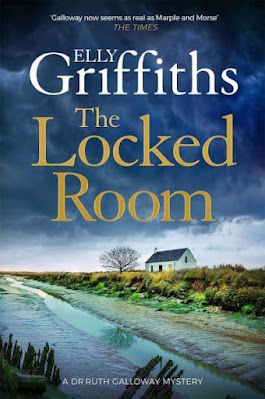
The Locked Room by Elly Griffiths: Reading Room Review


The Locked Room by Elly Griffiths came out in February 2022 in the UK.  Publication date for the U.S. is not until June 28, 2022.  I am posting my review now because so many fans of the Ruth Galloway series in the states can't wait until June and order a UK copy of the book, or some may be thinking about doing so.  So, I treat this series as one already out in this country.  However, I will again post this review in June. 


At this point in the Ruth Galloway series, my love of it is well established. Reading a Ruth Galloway book by Elly Griffiths is always the highlight of my reading year. The Locked Room, the fourteenth book, continues the traditions of great story, characters, and writing. And, as is evident with Griffiths embracing of new series and books in her writing, she doesn’t shy away from a challenge. The Locked Room is set in the opening days of the COVID-19 pandemic, a brave undertaking for authors, as so many readers are looking to escape the horrors of this ordeal in their reading. Of course, it is the talent of an exceptional author to be able to revisit a horror and give the reader validation and understanding of their nightmarish experiences. Griffiths says in her acknowledgements at the end of the book, “I thought long and hard about setting a book in lockdown but, having written a book a year about Ruth for the last thirteen years, it seemed wrong to miss out 2020.” It turned out to be a spot-on decision. The characters in whom we’ve become so invested need to experience such a life changing time to stay relevant to us. Kudos to Elly Griffiths for knowing her characters and readers so well and trusting them to handle this event. Her writing of the pandemic’s beginning is gripping, and it perfectly captures the confusion and uncertainty of that time.

Ruth’s mother has been dead nearly five years, and Ruth is finally sorting through Jean’s belongings in the house in London where Ruth had grown up. Arthur has remarried, and his new wife wishes to do some redecorating, so Jean’s personal items need to move on. In a box labeled “Private” Ruth comes across an interesting photo, an old photo of her salt marsh cottage in Norfolk with the notation of “Dawn 1963” on the back. With her mother’s distaste for Norfolk and Ruth’s cottage, it’s quite the puzzle for Ruth. She returns to her home and has intentions to do some digging on it. The results of her inquiries will expose a gobsmacking secret that Ruth’s mother kept to the grave.

There’s also some archeological digging that comes up, as a skeleton is discovered in the Tomblands area of Norwich. Carbon dating will need to be done to determine the age of the skeleton, but Ruth surmises that’s it’s medieval times and female. There’s some speculation that it could be a plague victim, but Ruth thinks that it’s more likely to be a scattered part of the church burial yard. It’s a timely speculation though, as news of a deadly virus called Covid-19 is surfacing. England is placed in lockdown status, with schools and businesses closing. Ruth and her eleven-year-old daughter Kate are isolated in their home on the salt marshes, so at least they can get out in the air daily, and they do yoga through Zoom with Cathbad. They also have a new neighbor named Zoe, a nurse and good company for Ruth and Kate, at the advised social distances.

DCI Harry Nelson has just started an investigation into some purported suicides of women who didn’t seem to be in a suicidal state of mind. Something they all had in common was attending a weight-loss center called Lean Zone, one that Ruth had checked out but decided it wasn’t for her. Ruth’s neighbor Zoe is a regular at the meetings, or she was until lockdown closes them. DI Judy Johnson, DS Tanya Fuller, and DC Tony Zhang interview families and friends of the supposed suicides, and they are examining the homes of the deceased. It’s fortunate that the team has this headstart because Nelson’s boss, Super Jo, calls a meeting to discuss the new Covid safety measures. Before you can say “Bob’s your uncle,” the lockdown order is issued for the country, and entry into homes for interviews isn’t possible. The police station must stagger shifts, too, with only two people, plus the secretary, working in the Serious Crimes Unit at a time. Nelson finds himself alone in his house, as Michelle is in Blackpool visiting her mother. It does give him the opportunity to go see Ruth and Katie, even though he’s breaking the rules to do so. Ruth and Nelson have developed a less guilty attitude about being together, but it’s certainly far from a good situation for either of them. When Nelson’s daughter Laura comes home for lockdown, once again Ruth loses Nelson to his first family. Michelle doesn’t come home until the end of the book, but readers are aware that she’s come to some decision while she was away.

The place setting of this story is especially perfect for the darkness of the period. Ruth and Kate isolated on their piece of salt march paradise, which starts to feel less like a place of freedom and more like a prison, as they are forbidden anything else. The place that they do sneak and visit is anything but cheery. Ruth’s friend Janet, who lives in one of the historical houses at Tombland in Norwich, calls Ruth to come and look at some strange findings. It’s a place of plague history, and the legend of the Grey Lady ghost is well-known. The plague and the pandemic are easily compared with places like this to provide ambience. One of the earmarks of Ellly Griffiths’ Ruth Galloway series that I enjoy so much is the link to Norfolk folklore. This book introduces the Grey Lady that haunts Tombland, and readers will no doubt recall the Black Shuck with its death stare and the ghost lights of Norfolk’s Lantern Men that will lead you to your death in the marshes. Atmosphere never goes wanting in this series. 

Readers are given an intimate look inside the lives of our beloved characters’ struggles with the challenges of a lockdown. From the shut-down of schools and trying to do classes online in a new format called Zoom, to parents homeschooling their children, to conducting a police investigation with reduced resources and distanced contact, to shopping for groceries in a queue, to fighting the loneliness and isolation from loved ones and colleagues, to the awfulness of having a loved one deteriorating from Covid and landing in intensive care on life support. The characters we’ve come to know and love are hurting, and we hurt with them, remembering our own fears and indeterminate future. Griffiths is able to incorporate many problems of the pandemic into this novel as a natural part of the storyline, not superfluous material. Domestic abuse and a lack of PPE equipment for medical workers and housing problems for students with no place to go. All this is brought to the forefront of our attention and brings back memories of that time we all went through. One of our long-term characters will face Covid full-on, and we will suffer through the tragedy of preparing to say goodbye to a loved one struck by this killer disease. 

This review might seem long to some, but there is so much I didn’t touch upon, so much for readers to still discover. I want readers to have the joy of reading the words of Elly Griffiths to reveal what a brilliant tale this is. I think fans of this series will be thrilled with The Locked Room and be champing at the bit for number fifteen, as there is a cliffhanger at the end which promises to bring some major decisions to some of the main characters’ lives. 

I do feel I need to comment on the relationship quagmire that entangles Ruth and Nelson. As much as I am a fan of Ruth and Nelson together, this book had me wanting some resolution more than ever. I was rather upset with Nelson that his grown daughter Laura whines and he races to her, leaving Ruth and their amazing young daughter Kate to understand. My understanding with him is growing thin. My heart breaks for young Kate as she is always so delighted to see her father and never complains when he leaves them short. It’s clear that he loves Ruth and Kate, and I’m ready for him to man up. Or maybe someone else will.

The Locked Room is a book you don’t want to miss in the Ruth Galloway series. Don’t be discouraged by the inclusion of the pandemic. As I’ve already stated, I agree with Elly Griffiths that she just couldn’t leave out 2020 in the lives of the characters whom most of us have long ago crystallized into living, breathing people. To continue our connection to the characters, it’s essential that they experience our same world. I believe that The Locked Room by Elly Griffiths will be held up as an example of successful pandemic literature, and I can imagine people years from now reading it and gleaning from it how the shock of it all felt. I’m grateful that Elly trusted her readers, and now, her readers must trust her. She never lets us down.


Monday, February 28, 2022

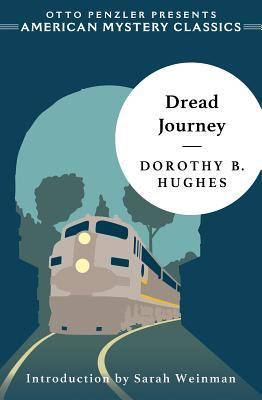
Dread Journey by Dorothy B. Hughes: Reading Room Review


I love mysteries set on a train, and I especially love those train mysteries to be set in the 1930s or 40s. Mix in some golden days of Hollywood when there were “movie stars,” not actresses and actors, and you have a setup for some high drama. Dread Journey by Dorothy B. Hughes contains these elements and all the accoutrements that go with them, from cocktail hour to black satin dresses. Over-the-top is the norm, as evident when one of the characters is ordering steak for dinner, wanting only "the best." Think The Great Gatsby on a train, and Jay Gatsby throwing his shirts in the air as Daisy looks on at how splendidly beautiful the “best” shirts were. As the darkness behind the glamorous society facade is revealed in Fitzgerald’s book, the darkness of celebrity fame is exposed in Hughes’ book. All the cocktails on the luxury Pullman car on The Chief cross-country train can’t dull the sound of masks cracking and dreams dying. 

Kitten Agnew is a movie star. She has proved her worth as a box office draw, and she will not be dismissed as yesterday’s news. On a cross-country train trip from Los Angles to Chicago and then on to NYC, Kitten is in a fight for her career and, ultimately, her life. The role of her career, the goal of her life, is to play Clavdia Chaucat in an adaptation of Thomas Mann’s The Magic Mountain. Vivien Spender, the producer/director who found Kitten and made her into a star, has been, since he found her, grooming her to play this part in the movie he will produce, his magnus opus. But now, Vivien has found a new Clavdia, a fresh face to mold into his image of Clavdia. However, Kitten has an iron-clad contract with Vivien and won’t step aside. She was not the first beautiful girl to catch Viv’s eye and then later be discarded when he grew tired of them, so Kitten made sure her contract could not be broken. 

The train trip to New York City is set up by Viv under the ruse of going there for the premiere of Kitten’s new movie. At the last minute, his intentions become clear to Kitten, as he forces her to share a room on the train with his new ingenue, Gratia Shawn. There’s no discussion about it because Kitten and Viv aren’t talking to one another by then. Kitten has threatened Viv with a lawsuit, one which he will lose because of her iron-clad contract. He has offered her a million dollars to give in, but Katherine “Kitten” Agnew will not go away: she alone will play Clavdia. With a stalemate existing between them, Kitten has an overriding fear when the train trip begins of what Vivien Spender has in store for her. “She was afraid. It wasn’t a tremble of fear. It was a dark hood hanging over her head. She was meant to die. That was why she was on the Chief speeding eastward. This was her bier.” 

Vivien Spender had hoped to keep his new girl under wraps until New York, but Kitten knows Leslie Augustin, famous band leader and singer, who is also in their car, and drinks in Leslie’s room gives way to Gratia joining them. Journalist Hank Cavanaugh is also in Leslie’s room and working his way to his preferred state of drunkenness. So, a foursome of sorts is formed for drinks and dinner and whiling away the many hours on the train, exposing Gratia’s beauty to the public ahead of the plan. Kitten is glad of the companionship, as she is trying to ensure Viv doesn’t get her alone to try and eliminate her. Hank learns of Kitten’s trepidations about Viv, and he feels he might at least do something useful in life by saving her. Hank and Kitten have one of the longest conversations in the book, with Kitten in a completely honest moment in her wondering about dying and heaven and hell. The train speeds on, and the small world of the luxury car on the Chief train gets closer to its final act. The atmosphere is tense, and the suspense builds steadily with each chuga chuga chuga of the wheels. Can murder be averted, or is it the end of the line for Kitten? 

Dread Journey is an ensemble piece, with each character is the cast receiving their solos where their thoughts and dialogue reveal themselves. Well, fresh-faced Gratia is the exception. Her character seems to be shaped by what others think and say about her rather than inner reflection or problem-solving thoughts of a deeper nature. A smattering of short outbursts of dialogue from her are her attempt to make her position clear. And, it is Gratia who uses the word “woke” to describe herself at the end, which may be the most important thing she utters. There’s no doubt as to what Kitten Agnew, Vivien Spender, popular band leader Leslie Augustin, burned-out journalist Hank Cavanaugh, or Viv’s loyal and long-suffering assistant Mike Dana, and the failed script writer Sidney Pringle are in torment about. They desperately want to find the happy ending but are afraid that one doesn’t exist, except for Viv, as his narcissism can only imagine scenarios with him succeeding. While Viv was the character I liked the least, it was quite interesting to learn through his thoughts how clever he thinks he is, his overblown confidence in there only being one right answer to anything, what he wants. Shades of Harry Weinstein are easily conjured up as we learn what the price of being a Vivien Spender star is. The Pullman porter, James Cobbett, has some deep reflections and thoughts about his passengers upon which he lingers, but James knows contentment, and, thus, he is separate from the other characters in the ensemble. Through James’ separateness, the reader has insight into the other characters as he watches them from his seat in the car or serves them. They often have their masks down in front of James, so the reader benefits from James’ invisibility to his passengers. 

This book falls squarely in the noir tradition of the 1940s and 50s noir fiction, and Dorothy B. Hughes is a revered noir writer of the 40s. All the characters struggle with a world that has disappointed them and shown them things they cannot reconcile into a happy existence. Kitten, Vivien, Leslie, Hank, Mike, and somewhat less Gratia. They all are floundering in a world of broken dreams that lead to despair. Classic noir presents that the American dream is not actually an attainable goal, trying to find meaning in a meaningless world. Otto Penzler, who is the publisher of this edition of Dread Journey, states that “the lost characters in noir … are caught in the inescapable prisons of their own construction.” Rather a you-have-nobody-to-blame-but-yourself judgement, but in defense of the character’s blame, the existential state of fate does hang heavy. There’s a darkness of theme and atmosphere, which is personified by so much happening in the dark hours of the journey, like a living, breathing entity hovering to pounce. There’s the sexual tension between Hank and Gratia, Leslie and Gratia, and the sexual seductive postures of Kitten and the sexual predatory expectations of Vivien. And, there’s the dialogue of noir, mostly short and abrupt, often with a dramatic flair. The dialogue between the characters in Dread Journey is always on the edge of despondency. The unhappy ending seals the noir deal, and that shouldn’t be a spoiler for readers. Most people wouldn’t expect this setup to end anything but badly. 

I am so glad that I picked out this Dorothy B. Hughes book to read in the classic crime fiction being reprinted. It was a wonderfully suspenseful tale and well written. The closed setting of the train amps up the excitement tenfold. That it is a dark tale doesn’t mean it’s a depressing one, well not in the sense of the reader being disappointed. It’s a fascinating tale, with the images of it clearly playing in your head, as if a film. Even though I was fully involved in the Dread Journey, I wasn’t overcome by gloom. For those of us who love jazz and blues music, reading this book is like hearing the sad notes of a song where someone’s been done wrong and loving the sound despite the message.

I would be remiss if I didn’t mention the introduction to this edition of Dread Journey. I was thrilled to see it was written by Sarah Weinman, an author whose knowledge of crime and crime writing is exceptional. This introduction by Weinman really deserves a review of its own. It’s concise but thorough, a perfect introduction. Weinman obviously knows tons about author Dorothy B. Hughes, as Hughes is her favorite author and In a Lonely Place by Hughes is a yearly reread, but Weinman doesn’t have to spend pages and pages telling us everything that’s in her head about this author. She conveys to readers the sense of who Dorothy Hughes was and provides remarks about Dread Journey that actually aid in the reading of the story. Weinman’s character breakdown of those traveling on the ill-fated train ride was an invaluable resource to me in keeping the characters straight at first. Reading Weinman’s introduction will give readers the background and notes on this story to enjoy it to the fullest. 

To wrap up this lengthy review on a short book, Dorothy B. Hughes can tell a story. Her writing is so flawless that you don’t even realize just how good it is until you’ve finished the book. If Dread Journey is not even Hughes’ most well-known book, then it’s a certainty that I will read more of her. It’s always exciting to discover a new-to-me author and another sub-genre of my favorite genre of crime reading.


Dorothy B. Hughes Quick Crime Writer Bio

Dorothy B. Hughes wrote fourteen crime novels, mostly between 1940-1952, and Dreaded Journey, her eighth, was published in 1945. She wrote only one more novel after 1952, The Expendable Man in 1962. Her books are described as the hard-boiled, noir styles, and I certainly felt the noir in Dreaded Journey. Three of her books were made into movies (1943, 1947, and 1950). Humphrey Bogart starred in In a Lonely Place, perhaps her most popular work, in 1950, and it doesn’t get much more noir than Bogie. After her last novel, she continued to write criticism, reviews, and non-fiction.  For 39 years, Dorothy reviewed mysteries for the Albuquerque Tribune, the Los Angeles Times, the New York Herald-Tribune and other newspapers. She received an Edgar Award from Mystery Writers of America in 1951 in the category of Outstanding Mystery Criticism, and in 1978, Hughes received the Grand Master award from the MWA. In her days before the novels, she had written poetry and worked as a journalist. She died in 1993 at age 89.

“She carried her head like a lady and her body like a snake.  ~ Dorothy B. Hughes, Dread Journey


Wednesday, February 23, 2022

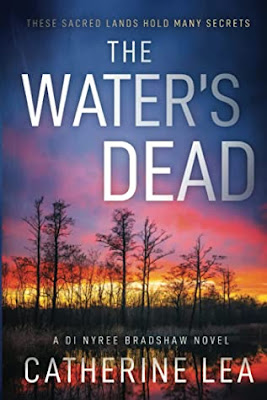
The Water's Dead by Catherine Lea: Reading Room Review


One of the reasons I enjoy reading so much is that it broadens my horizons, introducing me to or adding to my knowledge of worlds beyond my backyard. One of the reasons I read fiction so much is that I like a story with my learning. Fiction can show the effect on people who deal with real life issues, not in a didactic approach but a narrative that allows the reader to become engaged in history and current issues. Enfolding the reader into the story is something at which Catherine Lea excels in The Water’s Dead. Sense of place and authenticity of the characters wrapped in a gripping story ensure that reading this book is a genuinely immersed experience. With Catherine living in Northland, New Zealand, which is the setting of the story, I was excited to dip into a place I hadn’t read about and to learn more about the indigenous Maori featured in the book. 

For twenty-five years, DI Nyree Bradshaw of the Far North Criminal Investigation Bureau has worked hard to prove herself in her department of almost all men. When she receives the call that the body of a young woman has turned up in a volcanic rock pool beneath Mason’s Rock Waterfall, she has no idea how huge this case will be and how she will have to prove herself all over again. When Nyree views the body in place, she has a glimmer that it won’t be an easy one. From the chin tattoo on the young woman, it’s obvious that she is a Maori, and there’s lots of distrust between the Maori and those outside their land in the Northland of New Zealand. Permissions aren’t legally required, but to stand a chance of getting any information, Nyree will have to gain permission to come onto Maori land. Fortunately, there’s a detective on her team who is Maori and is familiar with the proper protocols. 

Police procedurals are exciting with their investigative procedures and the increasing pressure to solve the case, but this police procedural is particularly time sensitive and urgent. Not only is Nyree looking for the young woman’s, Huia Coburn’s, killer, the DI discovers that Huia was babysitting her cousin’s six-year-old daughter Lily Holmes the night of the murder. Now, Lily is nowhere to be found, and Lily is diabetic, so she needs her medicine to live. Nyree is determined to find Lily alive and get her back to her mother. 

DI Bradshaw has her work cut out for her, and the barriers to finding Huai’s murderer and who has Lily keep piling up. She must navigate through the delicacies of interviewing the Maori people on the local marae, as they seem less than forthcoming with information. Huai’s parents, mother and step-father, are behaving in a bizarre fashion, and it becomes apparent why Huai moved out of their home. Huai’s Maori father, Rawiri Cooper, hides information, which is both puzzling and frustrating to Nyree. A Detective McFarlane brought in for another assignment keeps butting into Nyree’s investigation and spreads seeds of distrust in the department about Nyree’s leadership. But, Nyree knows that her work and results will prove her worth, so she tries her best to ignore any dissension. Of course, Nyree realizes that above everything, the most important job she has is to find Lily Holmes. Huia’s murder must be addressed in order to find out who took Lily, and Nyree is running on little sleep to find and follow the evidence. She, and the reader, will be shocked to uncover what the major stumbling block to her investigation has been, a twist that is brilliantly revealed by the author.

Nyree has her personal demons to deal with, too. An estranged relationship with her son and a recently released convict who has sworn revenge against her. One thing that drives Nyree in the hopeful recovery of little Lily is Nyree’s feeling that she failed her own child, her son. She doesn’t want to fail Lily. As the hours turn into days, the suspense of the search grows to a spine-chilling level. The desperation of Nyree to find Lily is felt in the pace of the novel, Nyree and her team interviewing people multiple times and pressing them more and more.

Catherine Lea has given readers a thrilling story, with fascinating characters to both love and hate. I’m so pleased that DI Nyree Bradshaw is to be a series. While it’s clear that Nyree is one tough, dedicated detective, I’m looking forward to finding out more about her and seeing her in action again. I’m wondering which police associates will play a recurring role, as there was a mixture of good and bad, keeping it interesting wondering who was reliable and who wasn’t. I expect that readers will continue to learn more about the sub-tropical beauty that is Northland, New Zealand and the pockets of poverty that are interspersed there. The layered plot in The Water’s Dead was so well paced, creating that building tension and suspense, action getting more intense chapter by chapter. Page-turning is the absolute best way to describe the effect on the reader. I am ready and waiting for the next case, Ms. Lea.

Monday, February 14, 2022

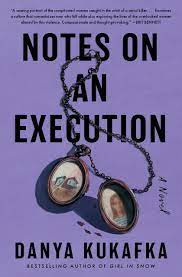
Notes on an Execution: A Novel by Danya Kukafka: Reading Room Review


Pain.  Everywhere you turn in this book, you find pain.  It’s inescapable. Of course, with a title like Notes on an Execution, you shouldn’t expect warm and fuzzy. Some people’s lives begin in pain. Why do some come from that pain to be productive and caring, and why do others let their pain drive them to destroy? This is a book about a serial killer, but it is not a visit through the murders he committed. They are noted and there are some thoughts from Ansel Packer on his victims, but the focus is not on a description of the murders.  “What” isn’t the unknown factor here.  We know what was done and that he did. But, why did he do it and how did it affect those living who felt the shock-waves of his violence. There are always people left behind by the victims, people who grapple with its lingering sting.                  

Ansel Packer sits on death row for killing four women. It’s twelve hours until he will be put to death by the state of Texas on this day of his execution. The reader will be shown his sorry life, from birth to now, and Ansel will do his own reflecting, but the author has chosen three women who felt the impact of Ansel’s existence in their lives to tell the story of murder’s wide-reaching reverberations. One of the questions about a serial killer is how did he or she begin the journey towards killing. This book is far from an explanation or excuses of mitigating factors as to how the killer became a person who with a fair amount of ease could take life from another, but it is a close look at circumstances and choices combined. It is interesting to discover that Ansel is shown to have killed animals from an early age, a trait linked to serial killers. Ansel also came from an abusive home, which is often associated with serial killers. And, Ansel demonstrates in his current situation and his past actions the skill of fine-tuned manipulation. Whatever the causes and effects of murder, whatever makes a serial killer, it’s certain that murder doesn’t exist in a vacuum. The women who tell so much of this story could be said to represent Ansel’s beginning, middle, and end, but the line is not quite that linear.    

The three women, whose stories intertwine with Ansel’s life, telling their connection to it, are survivors. They each have fought a battle of invisibility in the eyes of others and found a place of meaning in the world, overcoming both their physical and inner demons. Lavender, Ansel’s mother, makes a choice of how to end the abusive existence of her husband’s terror, trying to set her children and herself free to live a better life. But, in her endeavor to end the abuse, she abandons her children to a future of unforeseen consequences. Lavender doesn’t go back for her children and carves out her own place of safety and peace. Hazel is the twin sister of Ansel’s wife Jenny, and Hazel has seen the change between light and dark that pass over Ansel. She is also witness to the life her sister has found herself trapped in with a controlling and increasingly unpleasant Ansel. Saffy, whose mother died in her thirties, is also set adrift at a young age and finds herself in the same foster group home as Ansel.  Ansel had begun his descent into darkness by that time, and Saffy experiences a horrifying discovery of his rage she will never forget. Saffy grows up to become a homicide detective, and she is the first to suspect Ansel of murder.

Danya Kukafka has accomplished what every author strives to write and every reader longs to read. She has written a unique take on a subject. As a reader, when I can say I’ve never read anything quite like the book I’m reading, it’s a huge incentive for me to keep reading. In this instance, that subject is serial killers. Using the vehicle of the three women to balance out the killer’s reflections, there is a wholeness to the story that could not otherwise have been achieved.  And, seeing the totality of his existence, questions start forming about the possibility of Ansel Packer not becoming a serial killer if this or that circumstance had been different. Or are serial killers a psychological foregone conclusion? Is he a psychopath, born to the violent tendencies? Kukafka cleverly gives a push to the answer she seems to believe in some of Ansel’s actions as a young child, even before his mother leaves, and yet, maybe that's a bit of a red herring.

Starting the story at the last twelve hours before the killer’s time of execution gives an urgency to it. It's not a fast-paced book, but the reader knows that time is growing ever short for this person who has spread so much pain. Ironically, Ansel Packer is told that his execution will be painless. Knowing what awaits Ansel, the reader keeps turning the pages, looking for some redeeming part to this wasted life. Is there any? If he lives, might there be redemption, or does Ansel’s story begin and end with his narcissistic desire for people to understand and acknowledge him as above the fray of ordinary life. His inability to handle any criticism does not bode well for understanding or redemption. For me, the truth is that there is no redeeming part to him, and his desire to live longer is not so that he can be a better person, but so that he can be better understood as a unique individual. In the end, Ansel Packer is a killer who isn’t remorseful about the lives he took or the lives he forever changed, and I can’t see redemption without remorse. He killed four women with no thought of their desire to live and those who love them, and that demands a harsh judgement. The compassion belongs with those women.

And, yet, even after I come to this conclusion, I read back through the last chapter and think maybe there is remorse that’s not just about himself. If he’s a psychopath, there’s no question that he is beyond redemption. And, he is a psychopath, isn’t he? Isn’t he? I can’t get the words of one of the females in his life he grows close to out of my mind. She tells Lavender, his mother, that “Ansel had this idea …he talked about it a lot: the other worlds that might exist, if you changed just one tiny choice.” There's that "why" that tortures us so creeping out to play mind games with us.The author doesn't just keep the reader immersed in this story until the very last word of the very last sentence, she creates a debate within your brain that keeps going and looking for resolution.

Danya Kukafka’s writing has been described as lyrical prose, and I can’t argue with that description. She has a grand command of the language and uses it beautifully to convey story and points of thinking that the reader will be wrestling with long after the last page. Notes on an Execution is Kukafka’s second novel, following her 2017 debut entitled Girl in Snow. I intend to backtrack and pick the first book up to read, and I look forward to following her career. Danya is also a literary agent with Trellis Literary Management, which may explain the five year gap between books. With the success of her first two books clearly assured, I’m hoping she might bring out her next book sooner rather than later. I think readers have a lot of future enjoyment coming from the pen of Danya Kukafka.